The purpose of this blog is to publish a 117,156-word book that I have written,
entitled Uncorrected Bound Proof. I commenced writing it on 1 January 2023 and
finished editing it on 3 August of the same year. The book consists of 100 chapters, each based on a
song in my personal Your Top Songs 2022 algorithmic Spotify playlist, in ascending
order from numbers 100-1. The book’s purpose is to tell the story of my not
uneventful life, but I have done so in accordance with the strict numbering order
of the playlist. This means that the events of my life are told out of sequence;
however, I have done my best to ensure that the central autobiographical narrative has remained
united and coherent.
I have made a few half-hearted attempts to engage the interest of publishers with regard to this book but none has proved successful. Rather than embark upon an extended commentary about the current state of the British publishing industry, it is far more realistic for me to understand that there are no serious takers for a difficult and challenging book by an unknown writer based on what is now a two-year-old list of music. In truth the book should probably have been rushed into publication in late 2023 while it was still current (or "hot") but in the present environment, or indeed in any environment, that is unachievable.
As a consequence, I have decided to publish the book, chapter by chapter, in this blog since I believe it is the best thing I have ever written and am not keen on waiting until after I am dead before it is recognised as such. Who knows - some enterprising publisher might come across this blog and want to transfer it into print. Books, after all, are still easier for most people to read than a computer screen.
I do not intend to "explain" Uncorrected Bound Proof any further than the description in the first paragraph of this post; to paraphrase Ian McCulloch apropos "The Killing Moon," you don't buy a book of poetry then buy another book to explain what the poems mean. I trust my readers to have sufficient intelligence and enterprise to work it out for themselves.
Some of the writing in this book will be familiar. This is because I took the opportunity to include some of what is, in my opinion, the best writing that I have done on various blogs. A kind of "greatest blog hits" if you must, all the better to explain who I am and why I write as I do. Some chapters are extremely brief, others immensely long.
Above all, Uncorrected Bound Proof is a fragmented story of a jumbled confusion of a life which I believe is worth sorting out.
Friday
22 July 2005. The sky is overcast and so is the cemetery. I think it
was Chadwell St Mary Cemetery because it was just off the motorway, past
Tilbury and the pylons and what will eventually feed into the North
Sea. It looked like somewhere in Oxfordshire, semi-rural and moderately
opulent. Everybody is here and I'm not sure they believe that they're
here, that they ever had to go beyond the farthest eastern boundaries of
the city they assumed would forever enclose them all.
Why
am I anywhere? Why does it always have to be about me? There are people
around me, people with whom I speak all the time over a computer
screen. Real, proper close friends of the person we've all come to mourn
today. Not nodding acquaintances like me. Do I come across as though
I'm pretending to be sad?
There is no pretence about my sadness. I am sad,
but not just because of what happened to my nodding acquaintance, and
close personal friend to others here who are infinitely more important
than me, a family member to yet others, and to one other person their
partner in life. One other person who's wandering around slightly dazed
and baffled.
But
there is also a countenance which I am morally bound to keep. Play it
straight and heartfelt. This was a deeply intelligent and lively person
who disappeared a couple of Thursdays before because she was on the
train to work and that was somehow, obscurely, illegal. The everyday
horror which routinely provokes only a shrug until someone you know,
even if only vaguely, becomes involved.
It
is not about you, yet it's all about you, from your perspective. It's
been nearly four years since you were at another funeral. You couldn't
get past what happened, or liked to convince yourself that you couldn't.
You know this is, for a key nanosecond, ALL about you. You have to
prove that you're still fit to live as a human being. You have to show
people that somehow you can get beyond the fourth stage, accept and try
to get on.
Because
you sat at home and brooded under headphones while they went out,
danced and had fun. Two of the people on a dancefloor you never visited
gone within a couple of months of each other. Do you know where you're
going to, Diana Ross once rhetorically asked herself. You know where you
might be going if you're not careful.
You
need to show these people who you are. You're much better at doing that
in person than you are online. A lifetime in the shadow of a ball and
chain you've been biologically obliged to haul around with you, or even
around your self. They think you're standoffish. Never say anything.
They don't get it. Although a few try. They know what key to turn in
order to get me functioning and then it's anybody's guess where the
rollercoaster lands.
You
stand in solemn silence but that's all you need to do, everything
that's being asked of you. After it's happened, people look at you
differently. You might even say, in some cases, fondly. You don't need
to say anything because your left hand says it all.
We'll make sure that you don't end up like I did, you think. But it's all words; what you mean is you'll make sure you don't end up like you did.
It
was the end of somebody's life, but also the closure of your premature
death. You'll hardly tell anyone, but this is, tragically, the almighty
kick in the backside that you needed. How much more life are you going
to miss? You walk out of that cemetery, back into the car, heading back
to the City, and you know you are different from the collared wretch you
had been that morning.
"There's a ghost on the horizon
When I go to bed"
You
only know ANONHI (as she later became known) from her cameo at the end
of a Rufus Wainwright album the autumn before. She sings on the version
of "Perfect Day" you find on Lou Reed's The Raven, too, but you
don't really get the connection at that time. This extraordinary voice
which sounds beamed down from 195-94 materialises like an old Cape
Apples shop poster from the sixties crooning about how something gets
him going, and you can't get going away from it, from her.
She
comes from Chichester but subsequently lived in Amsterdam, San Jose and
subsequently Manhattan. She did enough growing up in the UK to hear
what radio DJs and manly music critics had to say - mainly spite-filled
ridicule - about all the music she intrinsically loved. Her career can
be interpreted as her final revenge on all that disused discourse. Ho
ho, Marc and the Mambas - ha ha, it helped ANONHI grow up and who
remembers any of the jokers hyped up instead?
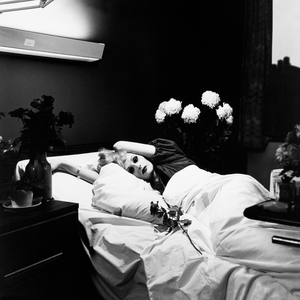
Later in the summer of 2005 there is an album, I Am A Bird Now,
with its cover of Candy Darling on her deathbed, terminally ill and
bored with life. I think of later in the summer of 2001, just before
that last funeral I attended. I buy the album, take it home and play it,
and like all the best albums it's as though the artist is singing, or
playing, to me.
"Hope
There's Someone" is the first song on that album and it's mostly just
ANONHI at the piano with subtle and not-so-subtle vocal overdubs. I
listened and thought, here's someone who actually gets what Culture Club
were trying to say with the song "Victims" (and, as you'd expect, Boy
George himself turns up later on the record, duetting with her on "You
Are My Sister"). The piano is hopeful but tense. The voice of ANONHI
cannot be pinned down, has to fly out of the church tower's barred
window. A high vibrato which doesn't have to exhibit its prowess.
And
a soul that is alone, and hurt. Time might be running out for the
singer, and she's hoping that when the end comes he will not have to face
it alone, in common with all of the rest of us. Confident yet hesitant -
the pause before the semi-guilty sigh of "uh-hmm" that heralds the
second half of the second verse. The tower of orange defiance which
rises with her determinedly climactic "SET MY HEART FREE," the little
chuckle of "YEAH," which she permits after the final "nice to hold."
But
then she begins to hammer chords of unexpected fury, or is it fear?
Multiple ANONHImass voices come in on varying wings of harmony or
discordance over a Philip Glass organ arpeggio and violent strings -
Joan Wasser on viola, Vancouver's Julia Kent on 'cello - as if to
scream, politely, "don't let me die." Reaching a final climax, the music
recedes, back down to one voice and its piano, a wordless, sibilant
weep seeking permission to go on living.
It sent me out the door, that song, and back towards the world.
One
summer following a prolonged stay in hospital which made me question
whether I could even ever walk again, let alone dance, I randomly came
across the music on late-night radio. From the new album by Plaid, the
DJ told me. That nice, constant, politely-blinking star in the far
north-eastern corner of the musical firmament, mainly because their
music reminds me, as does so much other music on the same label, of the
East Neuk of Fife, the lengthening shadows on the boardwalk parallel to
the golf course, the icy immensity of the North Sea, the feeling that
being in St Andrews has placed you not quite in "the world."
You
could listen to a lot of music from the last four or so decades which
would remind you of St Andrews in the early eighties. Forget the pain,
hunger, ideations and untethered displeasure. Your mind chooses to
recall the highlights only. The shade of green that the sun makes the
grass at certain times when afternoon is gracefully blending into
evening - "Taking Islands In Africa" by Japan, the last verse of "Love
Is A Stranger" by Eurythmics, even the instrumental break to "Ooh To Be
Ah" by KajaGooGoo (those slightly delayed keyboards, dragging half a
beat behind the rhythm, creating a strawberry globe of otherness) would
all make a new sense in this unwordly world.
Or
you might think of lullabies, soothing pictorial boxes of celestes and
rhythms so lightly accented they could bear wings, the music which has
stayed with you the longest and deepest, because everything we
experience, do or endure in our lives is reliant on the abstractly
scattered signifiers you registered when you were perhaps too young to
understand much of anything beyond elemental appeal, or appealing to the
elements.
So
much of what has come out on the Warp record label has appealed to that
hardwired first childishness, perhaps more so than the
closely-engineered synaptic plays of Ghostbox (watch how the perceived
nostalgia cell jumps into, but does not leapfrog, the one permitting
awareness). Listening to Boards of Canada or Aphex Twin or even Plone
will set you back to an element of character that you've spent your
whole adult life attempting to deny. "Aquarius" by Boards of Canada will
have you staring at the Pentlands across the bay from Musselburgh on a
cold, dark November teatime, seeing eternity in the seagull whose name
was Nelson. My lasting memory of Amber by Autechre is listening
to it on a Walkman while gathering emergency groceries in a Safeway
hidden in a forbidding shopping mall in Shepherd's Bush of a dark Monday
evening. Its steel rods of modest vertigo lent the experience the air
of more dreamed (and not a good dream, either) than having been lived.
The track from it I remember most clearly was, unsurprisingly given what
went on to happen in a further, granted lifetime, was entitled
"Montreal." The track Aphex Twin calls "Curtains" will always conjure in
my mind ceaseless, gracious skating across a frozen lake hidden in a
Norwegian forest, light in the darkness. As for "Summer Plays Out" by
Plone, that puts me right back in Chadwell St Mary Cemetery; those were
its belated, grudging times.
Yet
to someone who twelve months previously was in ownership of the
almost-definite certainty that he would never dance again, or anything
like it, along swam "Dancers" as a buoy of rescue. Its rhythms glide
rather than impose, its jetstream streaks unmistakeably and irrevocably
from the grand New Classical nobility of Kraftwerk, gleaming like the
Neumarkt in Dresden at eight o'clock of a morning in late April. There
is love and there is acknowledgement of impermanence and possibly even
destruction as the melody wanders its harmonic corridors - rooted in F
major, moving to G, then a nerve-altering B minor before settling back
in F, though further shades of prepared memory are provided by stray
visits to D minor, C and A minor (and thereafter brief but marked visits
to A flat and E minor). Its song never settles yet could not be more
secure in its settlement. It could go on forever, or beyond the final Chigley bow,
or never have happened at all, except inside your head in bed at five
in the morning as you dream of bus routes which do not quite tally. You
consider it as a dance beyond the end of "time."
Plaid are two people who used to be part of The Black Dog, who have never made a record I didn't like, and Polymer, appropriately their most macromolecular record, was their tenth album and my favourite since their fourth one (2001's Double Figure, Benet Walsh's guitar loop on "Eyen" being a
newly-rediscovered harbour in itself). "Dancers" sprang out from its
template unexpectedly like a reminding kiss. It sent me facing the front
of the world.
It
was Friday 29 June 2001 when L.G. presented at our local GP surgery,
just around the corner from where we lived. She had been suffering from
breathing problems and coughs for some while. From the surgery she was
admitted to the Radcliffe Infirmary for an emergency tracheotomy. Nobody
could quite ascertain the cause of what seemed to be an obstruction in
the larynx.
Weeks
of investigations followed and it was finally established, as L.G.
frantically and tearfully informed me on the telephone on the afternoon
of Wednesday 18 July 2001, that she had cancer. A particularly rare and
brutal subglottic squamous cell carcinoma, the type of malignancy which
doesn't make itself visibly known until it's too late to do anything
about it.
Nobody
really knew what to do about L.G.'s cancer and I don't blame them for
not knowing. It is one of the rarest cancers - truly the case of one in a
million, unless the woman you love happens to be that one. To cut an
otherwise pointless story short, she lasted - I hesitate to say
"endured" - another five-and-a-half weeks until the cancer killed her at
11:30 pm on Saturday 25 August 2001, on the Intensive Care ward of a hospital which
has since been demolished, its resources reallocated elsewhere.
I returned to work - at the time I couldn't really afford not to
- in the manner of a dazed zombie. Life went on everywhere else but not
in me. How could it? How could one properly grieve when surrounded by
people protesting that your grief is spoiling their fun, getting in the
way of their work?
It
therefore follows that I had no reserve or capacity for shock or
emotional engagement when 9/11 happened about two-and-a-half weeks
later. It felt like a dream happening to somebody else. I was all out of
grief, drained by pain.
Still
less did I harbour any appetite for music. Music for a period became,
to me, unlistenable. It reminded me of too much. I felt that I needed to
venture beyond it - but to where? If you didn't see me stumbling around
Oxford of a weekend between, say, September and November of 2001, then
count yourself lucky. I very nearly didn't come back from that.
Then,
very early one Sunday morning, exhausted and ready to follow Laura out
of this world, I put on a record at very low volume (it being very early
one Sunday morning) and its final, nearly fifteen-minute-long song
felt, even at that dim distance, that it was speaking to me, urging me
to come back. It was "I Dream A Highway" by Gillian Welch from her third
album Time (The Revelator), which had come out about six weeks
before. I breathed. I came back. It was a fucking elongated struggle but
I came back. To music and VERY eventually to all else. If that song
could theoretically go on forever, so could I.
The
day before 9/11, a song called "How Wonderful You Are" was brought to
the attention of the BBC DJ Johnnie Walker. He was so taken by it that
he played it on high rotation on his radio show, and it got one hell of a
reaction, mainly from listeners who'd had enough of hell.
Its
author, singer and guitarist was a fifty-five-year-old Dorsetian named
Gordon Haskell whose name would at the time only really have been
familiar to King Crimson fans - he cameoed on In The Wake Of Poseidon and appeared on some of Lizard.
But Gordon had no illusions and stood for no bullshit, meaning that
after the early seventies times became fairly tough for him, even though
he continued to write, perform and occasionally record music.
Certainly
by 2001 Gordon had lived enough to know that he was just going to do
whatever he wanted, not what others second-guessed or ordered him to do.
He'd put out an album in June of that year called Look Out and
"How Wonderful You Are," done live in the studio with bass, brushes,
saxophone, slightly treated guitar and a voice which sounded as though
it had trod the seabeds underlying the canals of forever, was one of its
songs.
But
the song spoke to enough people that demand for it went through the
ceiling, if not quite the roof. It didn't sound like anything else on
the airwaves that autumn and that was its advantage. It seemed to
reassure folk who were sorely in need of reassurance, that everything
was still normal and was going to work out. Not the living hospital
nightmare of me coming off the Oxford Tube at Gloucester Green Bus
Station one late Saturday night, hearing the thud of DJ Otzi's "Hey
Baby" coming from the nearby pub and wondering whether this world had
anything to do with me any more.
Which
is odd because "How Wonderful You Are" is not a reassuring song. It
begins immediately - no prelude, no intro of any kind, predicating the
instant-fix formula of most of today's hits - and to what end? He goes
out most nights (why? Isn't there a "home" as such of which to speak?),
attracted by the lights. He goes to a pub to hear jazz and this pub may
be busier than or equally as deserted as the one in Deptford that Mark
Knopfler visited for "Sultans Of Swing"; the trad purists blowing (both
music and blowing away the cares of their day jobs) onstage, the
glam-rock leftovers in the bar sneering at them.
As
with "My Sentimental Friend" by Herman's Hermits (although writer John
Carter's demo cuts more cleanly to that song's emotional nub), Gordon is
waiting for a song to come on and spark off - well, something in
it that may well be love, or the suggestion of his potential for love.
He is a sentimental fool but possibly also a creep ("Makes me want to
fool around"). He strides up to someone with his hat down low and issues
the corniest of chat-up lines. He is almost certainly pissed, and maybe
as desperate as the George Michael of "Fastlove," the young gun who
didn't go for it and who is now middle-aged and wondering why his
routine doesn't work any more, suspecting that the world has moved on
and lefr him behind. Until you reach the point where he confesses "I
miss my baby." This is a bereaved man drowning in poured grief.
But
does Gordon's character even bother saying, or is capable of saying,
these corny words? He admits to always having struggled with the art of
conversation, and readily admits that others will regard the song which
gives him the spark with blank indifference or befuddled contempt - he
doesn't identify the song in question, but the implication has four
walls, meaning that Gordon understands that not everybody is going to
get how wonderful "How Wonderful You Are" is. This song's itchingly
perfect grammar and Hazlittian formality ("those for whom," "that it
illustrates") indicate the portrait of an intelligent person who
experiences regular difficulties transposing his inner articulation into
outward communication. He's seen it all in "Harry's Bar" (presumably
not the one in Venice); things happening fast, others built to last, and
the two may be interchangeable.
Yet
Gordon's man is confident that "this show will run and run" and that
things have "only just begun" - Al Bowlly could have crooned these words
seven decades earlier - although one is never sure how many times a
week or night this happens. "How Wonderful You Are" examines a condition
of emotional disrepair yet helped repair many emotions in late 2001
Britain. It made number two in the Christmas chart and so, the following month, did Harry's Bar, a compilation of songs from Look Out
and its two predecessors. Since Haskell continued to refuse taking bullshit, however, such success never came his way again, but by the
time he too died of cancer in October 2020, aged seventy-four, I'm
certain he was securely glad about himself.
The song helped remind me that there still existed an outside world.
Blinking through the
trees, grinning like a knowing but permanently concealed Cheshire cat, stood the
tower at the centre of power.
“This is a BEAUTIFUL day…a NEW day…”
There were many days
of this nature in that year. A flawlessly blue sky, everybody acknowledging
each other, talking with each other, statues, parks and the occasional taxi all
co-mingling in closed acceptance of their combined need and purpose.
The egg-white sun
dazzling all who chose to neglect its existence.
It felt to her like a new city. A different
city. A better one.
“We are to-GETHER! We are unified, and of one accord!”
How privileged and
inspired she felt to bear witness to the beginning of the end of the world.
*
Many
argue about the nature of hauntology but usually the real thing makes
itself known. It is the late spring or early summer of 2018 and I am
immobilised in hospital, dazed and, due to a combination of repeated
anaesthesia - I needed to return to the operating theatre some thirty
times during my admission for dressings changes alone - antibiotics and
morphine derivés, tripping, unmistakeably and unavoidably tripping.
Then
I would hear the deepest inner breathing that anyone could hope to
hear, the distorted perspectives, the angular volume balance. Later,
back at home - had I really been away, in all senses, for
nineteen-and-a-half weeks? - it struck me; Bobby Gillespie's slowed-down
breathing at the beginning of, and intermittently punctuating
throughout, Andrew Weatherall and Hugo Nicolson's mix of a song which
had once spoken to me of defiance and promise, that warm Westminster
ten-month summer of 1991. It was thr reproachful ghost of the past
materialising more meanginfully in my then-present.
In 1991, the writers of the New Musical Express voted “Higher Than The Sun” that year's best single, ahead of both “Unfinished
Sympathy” and “Smells Like Teen Spirit.” That would mean the record had to be really special, and for a lot of people
in Britain
“Higher Than The Sun” was “our” “Smells Like Teen Spirit”; a
declaration of anti-principles, a gigantic NO! in the face of
post-Thatcher/Reagan conformity. But where Nirvana screamed out their message with
great joy, Primal Scream had a subtler, more gently disorientating approach.
One is invited to overlook the clunkiness of using the word “hallucinogens” in
a lyric and the song's scratch mix of clichés (“experience and innocence,” “state of
grace,” “wasn’t born to follow”). Actually the clichés might be part of the
song’s point, since the words elope from Gillespie’s mouth only semi-clearly;
this is not the exuberant beyond-phonetics tongue-talking of fellow Glaswegian
John Martyn’s “Outside In” but more an A.R. Kane-ish swoon (“I live just for
today/I don’t care ‘bout tomorrow,” "fanta...stical places...").
The song as such barely exists beyond that statement; the
Orb mix which is the song's main feature on the album Screamadelica
foregrounds the song, with only a hint of the John Barry harpsichord (or
possibly cimbalom) melancholy and weeping dervishes which stream
through Weatherall and Nicolson’s 12” mix. There is an upward whooping
of something
approaching liberation, and then the spirit of (of all people) Tears For
Fears
(“Shout”) peers through the instrumental bridge, before the song mutters
itself
into fading vaporisation. You get the feeling that it could go on
forever, and in a lot of ways it has.
Weatherall
and Nicolson treat the song as tantric. They delay expressions, murmurs
and climaxes and render the song - or piece of performance art, as I
suspect Gillespie would prefer you to view it - darker, scarier and more
radical. Their sense of structural symmetry is peerless and emphasise
the possibility that you are bearing aural witness to a scared child's
prayer. There isn't very much of American Spring (as the duo was only
known in Britain, to avoid confusion with the Leicester progressive rock
band Spring, whose drummer Pick Withers later turned up in Dire
Straits) about the mix - the most remarkable thing about the Spring album is the cheerful lightness of its radicalism.
Yet
this mix of "Higher Than The Sun," as it stood to and for me in the
approaching summer of 1991, was at the time and in itself an indicator
of what had not yet even been thought of as hauntology, from twenty
years before, when pre-teen Bobby Gillespie was growing up in East
Kilbride, just across the A725 Expressway and Bothwell Bridge from where
I was growing up. The residual memory that our brains were, in their
own ways, different. The veering voices, the steel cube anomalies - my
childhood haunts of Uddingston and Bothwell crouched in the prowling
shadows of the Birkenshaw Industrial Estate - the need for escape. I
didn't do drugs, so any revelation was necessarily second-guessing. Or
at least was until I awoke, or did I remain lucidly asleep, in the
centre of 2018, knowing that I had also seen those "fanta...stical
places" though, for reasons I will go into later, bore no wish to see
them ever again.
I did always think that the American Spring Mix should have been included in, or supplanted the Orb mix actually on, Screamadelica.
Its inviting darkness passes to us a hint of the direly ecstatic
nothingness in which side three of that record culminates (despite the
latter's absurd payoff). As Weatherall and Nicolson view it, however,
like stout DJ Cortez in sight of the Pacific Aquaclub, the song proposes
a grandeur which far exceeds record collectoritis, a benign infinity
capable of embracing us all.
The
song escorted me through that other door and reminded me that the other
world I had always feared could be palpated and extolled.
(Author's Note: the opening italicised section was previously published as part of a Then Play Long piece on, of all benign infinities, Fleetwood Mac's Behind The Mask. I altered it very subtly for this piece.)
Released: May 1997 (single release and initial album release in Japan)
You
can't know about it if you never went to Habitat at the Botley Park
Roundabout, groaned as you sat down in a 100 bus heading to Witney,
never heard Bill Heine on the local radio or saw his shark in Headington
demanding that we not be destroyed - apt that the shark house was close
to an industrial complex in Shotover. Never scoured the racks of
Russell and Acott for pre-war popular music, when it was still
considered civilised by too many kindly people you were kind enough
never to bump into on the High Street of a Saturday, even if you were
disembarking from the London coach. Never ran off to the Carfax Chippy
when trout was on the High Table menu (again). Never went into the music
section of the Westgate Library itemising what they needed to order.
Never considered the two record store majors, facing each other across
Cornmarket like wearied gunslingers.
Never
went past the barracks on the 4B bus to Abingdon without thinking how
much they must have thought about them. Never asked (in their head, they
wouldn't dare ask out loud) the techno connoisseur banging out his
joints one floor above if he wouldn't mind turning the noise down, since
you're trying to get to sleep despite all those even louder voices
crowding your head out.
(So
many of these things not actually existing any more. In fact, most of
them have long since stopped existing since you were there.)
Never
sprinted to Massive Records behind the bus station to see what London
is like. And if London at its best in those days could make you feel
massive, this place could make you feel like an insect. You can't help
but react, conjuring up a dismally amusing fantasy involving the people
who hate you most, or perhaps it's the people you hate most if you've
got handy access to a mirror.
Never scooped up the tyre listlessness of Park End Street.
Fantasies
about revenge on the smugly rich. The song clocking on at the beginning
as though beginning the closing day's work. The nervous jingle of
vulnerable but that radio voice from your childhood (listening to Marvin
all night long indeed); this is becoming an imbalanced nightmare.
Then
the plea starts to show its teeth. You'll be first against the wall
(but who'll be last is the question the singer really daren't ask).
"What's THIS?" he exclaims, hurt and baffled. Random terms pulled out of
the Situationist hat, burbling Fender Rhodes (emergency on Planet
Patrol)...
...then
a SLASH, and a BASH, as guitars thumbnail a battering ram into this
plea, DO YOU REMEMBER MY NAME I THINK HE DOES - Kurt, are you here
("OFF WITH HIS HEAD, MAN!")? The guitar/rhythm lines transform the
Nirvana into a Rush before it all slams suddenly into a wall of molten
what
(the insomniac Tube driver in Geoff Ryman's 253, who finally manages to fall asleep, and as a welcome bonus never has to wake up either.)
An adagio ensues, an elegy for something not yet departed, a solvent sickness, a resigned doubt ("God loves His children - yeah").
At the quiet climax, the lead guitarist takes over the main vocal
refrain - nothing really matters to them. But there's one quick, final
roundelay of heaviness which splutters to a stop as though its steam
supply had all been used up (is that a plug being pulled out at the end,
or just a computer being switched off?).
Like
"Bohemian Rhapsody" - though structurally the song has far more in
common with "Happiness Is A Warm Gun," and perhaps specifically the
Breeders' cover - "Paranoid Android" is a stylistic advertisement for
the band. This is what we do, look at the range, what do you think? Its
real genesis is perhaps a lot more humdrum - some cocaine heads were
being obscurely disturbing when gathered around the singer in a bar in
Los Angeles - but you can't know THINGS if you never knew exactly why
they were done or who prompted the doing.
The song reminded me how easy it once was to mistake an enclosed world for an outside world.
This
record - for it is much more a record than a song - begins like the
remnants of a sixties song newly uncovered behind some awkward
plasterwork at the Scotch of St James's. Lurking low-pitched Hammond
organ and bath salts-calming electric piano materialise over what is
thus far the ghost of a pulse. Discrete Moog white noise button sound
effects flutter around like bashful Red Admirals. So far this might have
come out on Vertigo Records circa March 1970.
Then,
however, a modestly insistent rhythm and riff make themselves known,
and we are gently reminded that we are no longer in the sixties. A voice
appears which is far more in keeping with Howard Jones, including the
sarcastic one-octave-down spoken response ("Your head is gone and your
body's shaking"). They are playing in this club and the line between
musicians and audience is not readily definable. The further their
audience's minds are blown - and the audience may be responsible for
that blowing - the more the musicians are...transfixed or transported?
Their conclusion is "There
is nothing you can do because there is no solution/You gotta get down
to the noise and confusion." The world is a mess, the singer seems to be
telling us (as the semi-random Moog flutters reinforce), but all we can
hope to do, since it is unchangeable (and therefore, by implication, so
are we), is to celebrate the chaos (the singer's midway ecstatic
"OW!"), thrive in it and learn from it. Learn what? A different way to
live?
The
song's quiet radicalism is subtly sneaky. As you dance to it - as, in
the spring of 1991, you really had to - you realise that it is not quite
like anything else that's preceded it, including the fluffy Pollocking
of the Manchester School of Practised Derangement. The drums are
slippery, rarely On The Beat. The song finally disperses into a wistful,
synthesised coda worthy of...Camel, perhaps, or Ashra. It dares to
leave response and rationalism in your hands.
The trouble is, nobody really got this song, or the one before it ("The Storm") or World Of Twist per se.
They were perhaps too knotty a group to engage any real attraction.
They formed in Sheffield in 1985 and several of its original members
transferred to the bucolic yob-art of Earl Brutus, including James Fry,
the elder brother of Martin. Their singer was their former drummer, one
Tony Ogden, and it may be that he didn't quite have the spark that would
render unsuspecting lovers intrigued, or that the group's songs did
their best to avoid or conceal hooks. There isn't really anything to
hold on to in "Sons Of The Stage," which in many ways is the song's main
point. Their solitary album Quality Street was misproduced and
the singles traduced to their own shadows. Both Ogden and drummer Nick
Sanderson died long before they should have done.
In
the context of early 1991, however, which emotionally was something of
an undecided year for me, London felt newly glamorous and purposeful and
I wish I had then been worthier of it. This song, however, was a key
element of the times - the group are cited in Saint Etienne's "London
Belongs To Me," released later the same year, in a fantasy world where
they already had three number ones - and showed me how a
satisfactorily-enclosed world could yield unexpected opulence.
(To
memories of Hampstead, the Everyman cinema, the long-gone fish
restaurant on Heath Street whose name I cannot recall, Italian
restaurant lunches on Kensington Church Street, Hyde Park Corner in the
deep snow one curious Wednesday afternoon, David Lynch encomia and
above all to the best friend I ever had in my professsional career,
with whom I have had no communication since 1994 and who will here
remain unnamed but who I hope is still with us and happy.)









![World Of Twist – Sons Of The Stage – Vinyl (12", 45 RPM, Stereo), 1991 [r12690962] | Discogs](https://i.discogs.com/aMMBZ5t6MtC-C_6rauYUF3Uhjp_ofrV1LK18iqJD6O0/rs:fit/g:sm/q:40/h:300/w:300/czM6Ly9kaXNjb2dz/LWRhdGFiYXNlLWlt/YWdlcy9SLTEyNjkw/OTYyLTE1NDAxMjk3/ODctOTQxMC5qcGVn.jpeg)


