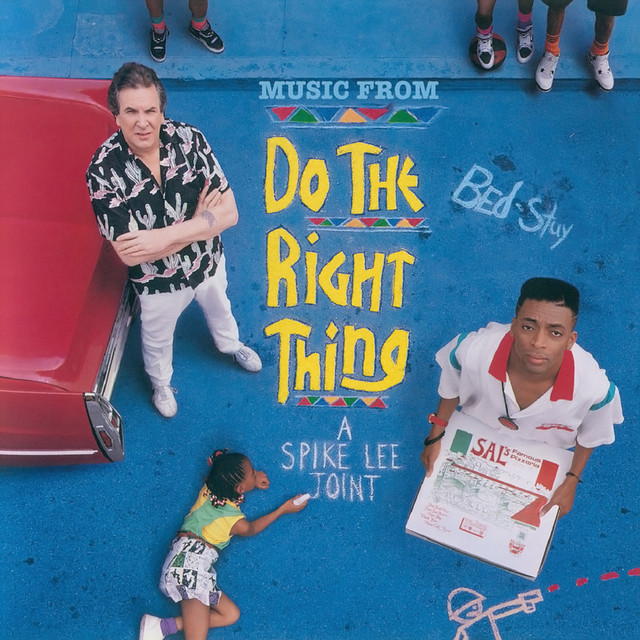

#80: PUBLIC ENEMY
"Fight The Power"
from the album Do The Right Thing: Original Motion Picture Soundtrack
Released: June 1989
You
had to be in the audience at the Ritzy Cinema in Brixton in the summer
of 1989, one sweaty early evening Friday, the house packed, to get it.
The opening titles, with Rosie Perez dancing and shadowboxing in the
tenement window. played the song LOUD. Not "loudly" because this wasn't
Merchant and Ivory. But played fucking LOUD.
EVERYBODY
was up out of their seat, dancing, yelling, shrieking, clapping. The
track burned through accepted 1989 like the devil's razor. For the next
two hours, people didn't just watch the movie. They argued with it,
there were heated and imperfectly audible debates in the stalls. The
dynamics generated by the film's deliberately contradictory polemics
radiated into the movie theatre, and the audience's words fed back into
the celluloid. In the end they depended upon each other, and those
arguments, that underlying celebration, ought to have reminded us that
this is how an audience should handle a piece of art. It goes back to
Shakespeare at the Globe with his last-second rewrites, audience
hectoring leading to improvisatory speculations and even Choose Your Own
Denouement. It wasn't about sensible jerseys hovering over their
inedible ice cream tubs, solemnly and patronisingly nodding.
"Fight
The Power" mattered in 1989 like no other song of that year mattered,
largely because it went so purposively and boldly against the fabric of
what was reluctantly understood to constitute pop music. For a proper
grasp of its renewed shock, you need to hear it in the context of the
soundtrack album, complete with the opening Take 6 radio jingle - get
ready to assemble, troops - and closing harmolodic Branford Marsalis
self-duet. While Marsalis didn't intend his solo to be anything
approaching harmolodics, Hank Shocklee and the Bomb Squad had other
ideas; like Ornette, they wanted Public Enemy's music to be about a feeling as
opposed to harmonic coherence. Like "Revolution 9" all these factors -
all twenty-one records sampled, anyway - fly across the ears and land in
the cortex. It doesn't' matter if they're tidy or structurally
congruent.
Did
it matter to Elvis, who never meant shit to Public Enemy? The point is,
like awopbopaloobop or ying-tong-iddle-i-po it is just THERE, it comes
at you and is fun, inspires you to get up and act. The track's factors
pile up, deliberately disparate, with the consequence that you have to
immerse yourself in the act of glorious revolt or take up croquet.
Public Enemy were not making music to be your friends. I saw them at
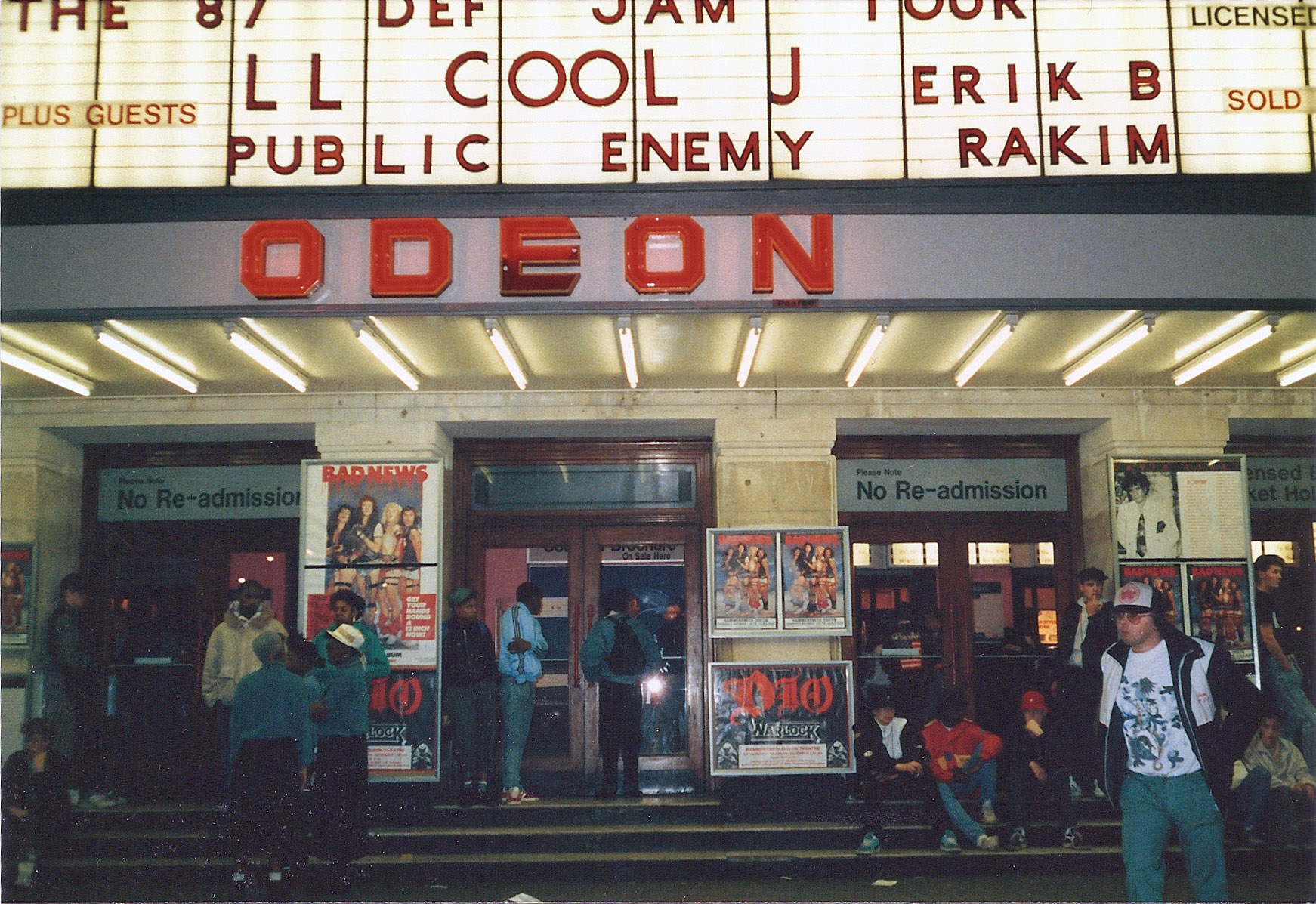
Hammersmith Odeon on 1 November 1987 - the concert sampled on Nation Of Millions, which means I'm technically on the record - and it was while flying over Italy en route
to the European wing of the Def Jam Tour that Chuck D had the idea of
updating the Isley Brothers (in 1975, their "Fight The Power" was
played, in its radio-friendly edit, on Luxembourg and not at all on the
BBC apart from Paul Gambaccini's American chart countdown).
The
revolution is upon us and who gives a fuck if you get it, or are
offended, or neither? The track's mere existence represents an
insurrection in itself. How fitting it should appear on, of all labels,
Motown. THAT'S what was going on in 1989. "I Shot The Sheriff" - Wailers
original rather than Clapton, I think - appears as a "the fact that"
punctuation mark throughout. Hey, Britain, why was there no hip hop on
your corporate wall? Like Coltrane's Ascension, proceed into the church and worship. Those who don't get "Fight The Power" were never meant to do so - in any sense.


No comments:
Post a Comment