
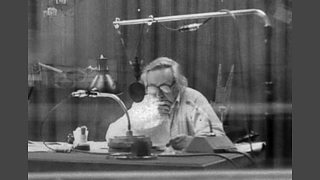
#78: CHARLES MINGUS
"Hobo Ho"
from the album Let My Children Hear Music
Released: February 1972
There is little jazz to be found in My Top Tunes 2022,
which is a grievous misrepresentation of my general listening habits.
Perhaps it's just that when I'm doing other things or idly listening to
something online I tend towards short, direct hits. Or else the jazz I
want isn't on Spotify and I have to go to YouTube or Bandcamp to find
it, or more likely to the jazz CDs we already have anyway, many of which
are not adequately represented or replicated online, which in turn is
why we have to hang onto them. As I write this, I'm approaching my
sixties and we need to reclaim the physical space that music has
occupied for perhaps too long a time.
But
that merciless culling mentality does not extend to our jazz section.
Frequently I despair about the way music is going, like anybody's notion
of Derek Dull, and proclaim that's it; let's lose everything except the
jazz, which was my first musical love and likely to prove my last
(respectful bow to the shade of the late John Miles). It seems to be the
only music that persists in coming through when all other forms fail
for whatever reason. Then I'm reminded of Miles Davis' particular
peccadilloes and where does one stop?
So
it's curious that the only two pieces of jazz music on the playlist,
and therefore in this book, are in extremely close proximity to each
other and on the same album. This of course can in part be attributed to
algorithmic quirks - the previous consecutive trio of fifties
chart-toppers derive from their usage in a playlist I entitled Platinum
Jubilee Number Ones - but I don't know what it says or suggests about my
life beyond that.
Anyhow, "Hobo Ho," a locomotive of a piece which I first heard Peter Clayton playing on Jazz Record Requests.
My father abhorred it and I secretly loved it (being open about one's
preferences in my teenage years was, to put it exceptionally mildly,
inadvisable). Of course its parent album was out of print despite only
having been released five years previously. I searched for it in vain
until I found a copy which cost nothing, exactly when I wasn't looking
for it (that is always how these things turn out).
"Hobo
Ho" is an artful studio reconstruction, or recutting, of something that
was allegedly so complex that Mingus' musicians couldn't get through it
in one take. Hence it was down to Teo Macero to manipulate the tapes,
re-edit, repeat key sections etc., much as he had done with Davis in
then-recent years. Records were records, rather than documented performances - as Mingus well knew, since he had used the same tactics on Black Saint And The Sinner Lady nine years previously.
So
the piece is artificial in execution, but beautiful in gut. Mingus'
bass riff sets the thing up, and then James Moody's tenor saxophone
comes in to play the bluesy melody. But sheets of low woodwind and
ascending brass then blow in like an incipient tornado, topped by
Kenton-esque trumpet squeals - the vendor will never sell any peanuts in
this weather - not all of which are tonal. The choreography here
is magnificent - solo bass riffs answered by sudden jump-backs from the
trumpets (we are definitely in a holy roller of a church assembly) and I
wish someone would still conceive a ballet to it - I'd say there's
quite a bit of Bernstein in here, but then again there was an awful lot
of Mingus in the West Side Story overture.
Like
a swinging Sisyphus, Moody's riff recurs over and over, eventually
joined by other, initially isolated voices - a gruff tuba (or tubas -
Howard Johnson and/or Bob Stewart and/or Jack Jeffers?), an insistent
low-end piano (Sir Roland Hanna), and a couple of jousting trumpets
offering their obbligati (Joe Wilder is the only credited trumpet
soloist here, but Lonnie Hillyer may be the second trumpeter we hear,
or it may even be two multitracked Wilders).
Then
the flood of horns and brass pours in, overlapping, disorientating, as
Moody does his best to ride the surf. Indeed there wasfor several years
some question about exactly who the featured tenorist was on "Hobo Ho";
originally it was insisted that Bobby Jones was the soloist, but Jones
himself said that it was James Moody, brought in for an unavailable
Illinois Jacquet - hence in the middle straight swing section, which
comes as a marvellous relief following several minutes of teeth-grinding
tension, the orchestra plays a transcription of the "Moody's Mood For
Love" solo rather than the "Flying Home" solo which had originally been
planned. Baritone (or baritones - Joe Temperley himself told me that he
played on the piece, but Danny Bank may also have been present) snarl(s)
like alligators.
Everything
keeps building up and up, and Moody does well to retain his unflappable
countenance, even when the piece is interrupted by the repeated
train-stuck-at-red-light slow dance section. It is this side of chaos
and that side of maximalist minimalism. It never quite veers out
of control, and as the final fade confirms, it could theoretically run
for ever. It was absolutely unreproducible in a real-life situation, as
absolutist in its staring-you-down way as George Martin's more ambitious
Beatle adventures. "Hobo Ho" lurks just beyond quite a lot of things.
Adjacent to its unlikely contemporary, Davis' On The Corner, and maybe that was the point.


No comments:
Post a Comment