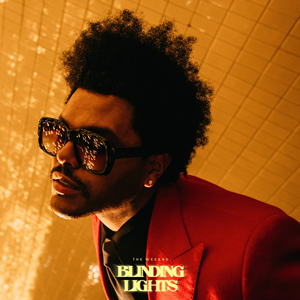
#4: THE WEEKND
"Blinding Lights"
from the album After Hours
Released: March 2020
The single came out in November 2019, when the world still existed. I was going to go into town and buy the album on the (Satur)day after it was released because Tesco over the road weren't stocking it. I remember that last Thursday and Friday of the world. People where I worked were already coughing. In my lunch break I watched the opening episode of the 1975 BBC drama series Survivors and clothes, hairstyles and attitudes apart it looked as though it had been written three days ago.
I felt fairly normal, if faintly fluey, on the Friday. Got some pasta from Luigi's Delicatessen on the Fulham Road because at the time it was impossible to buy in supermarkets. On the Monday evening I had stupidly ventured out to Balham Sainsbury's to find something but the shelves were nearly empty. It was urinating down with rain and the bus ride home was uncomfortable and the walk suicidal. That was where I probably picked up something.
As I say, I had been intending to go up to Cambridge Circus/Soho on the Saturday to pick up some records, including After Hours,
while Lena was at work. But we both woke up that Saturday morning
feeling horrendously achy and not wanting to get out of bed, let alone
the house. Of course we suspected the worst because in March 2020
everybody did.
While whatever we had might possibly have been in the neighbourhood, the suburbs,
of the virus, it definitely wasn't the virus itself - there were a
couple of false alarms but no "red flag" symptoms. Anyway, whatever it
was knocked us out for a fortnight - not literally, but we decided it
was safer not to stimulate whatever it was (most likely long-term 'flu)
unnecessarily.
Thus did we witness, mainly at second hand, the world instantly shutting down. People who'd been there all our lives - Tim Brooke-Taylor, Eddie Large, Lee Konitz, Henry Grimes; the list became endless - were felled by it. Someone a few miles away in Peckham died of the virus - that made the front page of The Guardian and the photograph of the poor woman in her black-tiled kitchen conjured up several of the hospital nightmares I had experienced two years before, and about which I talked in the chapter on Charli XCX.
In
what turned out to be a glorious spring - early summer, really -
everything was motionless, or rendered motionless. We all waited,
scared. Good neighbours with good intentions delivering food but bloody
Warburtons? No, we had to go out and do it ourselves, as soon as we
worked out where we could get some masks (something nobody on radio or
television told us).
I
took three weeks off work. I only really needed a fortnight but in the
second week I couldn't contact anybody because they were all off, down
with the virus. I just needed somebody to tell me that it was okay to
return to work. Nobody knew what to do then; the government were
shifting the goalposts all the time. I finally took my own initiative
and went back anyway, masked up and scrupulously careful since, as an
employee of the National Health Service, I was deemed one of the most
"essential" of workers.
Despite
one or two profoundly disturbing lucid dream reminders of two years
previously, nothing truly disturbing happened. I got night sweats which
necessitated my going upstairs and sitting in my physiotherapy-friendly
big chair but that was reasonably typical for the 'flu. But there were
no dry coughs or loss of sense of taste, nothing like that.
What
was a lot more disturbing was when we realised that after the first two
or three weeks it wasn't primarily (or at all) about disease
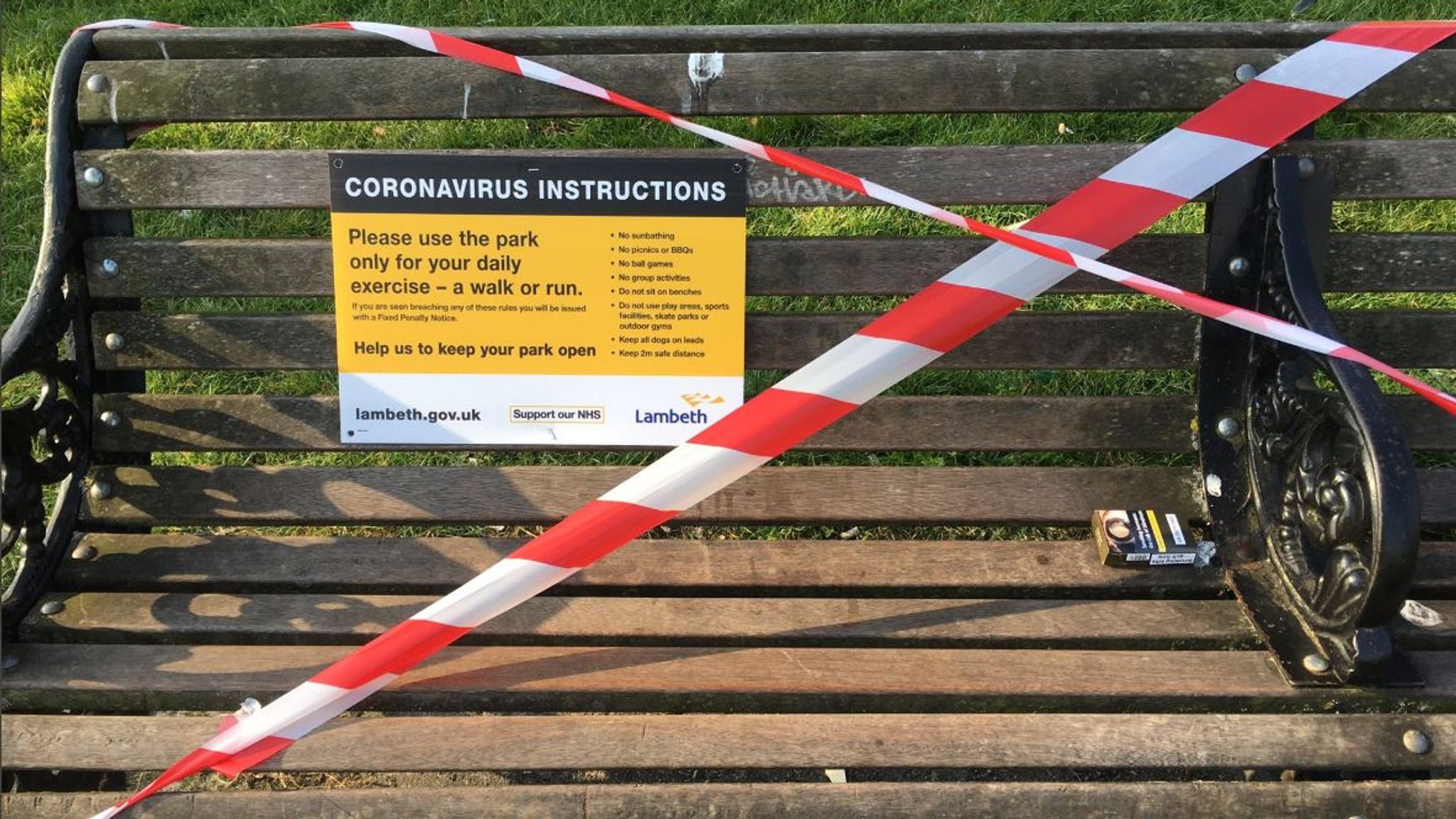
containment any more, it was about control of the population. The smug
police chiefs who came on TV warning of the punishments people who dared
to sit on a bench would face, or tweeted "jokingly" about arresting
supermarket customers for buying Easter eggs. In the meantime our
barbarian government caroused away not giving a fuck about any rules.
It happily stopped getting that stupid about a month into the pandemic. I was back at work by then and it was pleasing to travel in quiet buses on quiet roads to get to and from it. Shops eventually, if reluctantly, reopened. Yet the whole thing, even then as opposed to in long-term retrospect, was unreal, as unreal as my experience of summer 2018 had been. You could venture from your front door and know that the world you had taken for granted up until February 2020, although it superficially looked the same, was not the same world. That old world had simply ceased to exist. It was as if a mutant neutron bomb had fallen, preserving both people and buildings yet eliminating the function and purpose of either.
We huddled in our front rooms, all of us, frankly for fear of being shot by agents of assumed authority. The "inner refuge" they used to drone on about in those old Protect And Survive films dragged on for months rather than the prescribed fourteen days. No home baking, online yoga classes or kitchen discos could conceal this awful absence of a gravitational centre for human society, now expected to exist rather than live.
And it is the case that the song which most immediately and keenly reminds me of those melting times is "Blinding Lights" - like "Telstar" in another annihilation-facing age, simultaneously the last and first pop record, in that order. It echoes like a photocopy of a 1980s electronic pop song, that same drugged echo which radiates through most if not all of mainstream pop now because we are so unhappy, weary, frightened and desperate.
The song and its attendant video are about pain. You have to hear it in the context of the After Hours album - which we ended up purchasing online - and its suite of linked songs concerning personal collapse, as well as the series of videos which accompanied them (in order, "Heartless," "Blinding Lights," "In Your Eyes," "Until I Bleed Out," "Snowchild" and "Too Late"). These videos begin strange and incrementally become stranger and gruesomer (if, by the time we reach "Too Late," the only one of the videos filmed in broad daylight, blackly comedic). In the video for "Blinding Lights" itself the singer is jerked out of an inexplicable trance into what looks like a replica of Las Vegas. He chases a pigeon off the sidewalk but nothing else in this scenario is quite rational. The night is bright and illuminated - in another video we briefly imagine that he is walking through Vegas in the sunny daytime, but that blue in the air is revealed to be part of just another elaborate light show, as if the apocalypse has already happened and everybody and everything are underground - yet marooned, unaligned.
I knew instantly and instinctively that "Blinding Lights," though a characteristically Torontonian piece of popular art - I have Lena's word on that - was about hospital nightmares - at least it was to me. Drugged with contradictory and often conflicting drugs, deprived of full rational sensibilities,, nothing seems more real or simultaneously more unreal. Blinded by the glaring lights of the hospital ward which only grudgingly get turned off - and then only for a short time - drowning in the night, unable to sleep without my wife's touch. I perceived it all.
In the song's second verse the singer admits that he is running out of time because he can see the sun hit the sky (echoes of Supergrass, and therefore of Oxford). I looked to one side and it was dark, and to the other and it was light, and have I been asleep for three days or was it just ten minutes? His repeated "hey, HEY"s (note those distantly disturbing echoes of "Rock & Roll (Part 2)") would be concomitant with either stoned jubilation or an only partially-suppressed scream for help.
In the spring of 2020 the world was not what it should have been, or used to be, and neither was my hospitalised world of 2018. In that abrupt absence a gap is created and must be filled lest we all collapse and fall, or are pushed, through it, and "Blinding Lights" did that with an uncommon resonance, so uncommon that three years later the song continues to sell and be streamed, that it comes so high up on this particular list, because it inadvertently became a folk song marking a lost civilisation about which Michael Bywater and his late friend Douglas Adams - to which latter the former's Lost Worlds book is a barely-disguised elegy - would have equally been moved to gruff poetry.
And
it reminds me of my own internal terror about myself. There are
elements in my hospital nightmares which can, for the sake of general
sanity, only be known to me. They mercifully venture nowhere near the
more frightful things seen in the series of After Hours videos. Frightful; what a cowardly catch-all of a word to mask something INEXPRESSIBLE.
Perhaps
the most disturbing of the videos - and also, by some distance, the
shortest - is the one for "When I Bleed Out." In its predecessor the
singer has been brutally and mortally dealt with. But here he awakens -
or does he? - in a mansion awash with balloons, streamers and swooning
people prepared to swallow him up. I experienced such visions in 2018;
the celebrity recovery antechamber, sneaking out of a mansion at the
North Kensington end of the Portobello Road where I was basically being
held hostage - escaping, fleeing, but always ending up back in my bed,
on the ward, immobile and in ceaseless catheterised pain. Is this The
Weeknd's hell, this - party sliding decisively off any notions of
groovy, to be replaced by the human grooved into the carpet of
unredeemed penitence?
And yet I, and Abel Makkonen Tesfaye of Scarborough, Ontario, continue to live, seemingly through everything, albeit still endeavouring to summon the will to get our selves backed. Vici mea fata vivendo.


No comments:
Post a Comment