Friday, March 27, 2026

CHAPTER 8

 
Bang Bang Bang (Mark Ronson song) - Wikipedia 
 
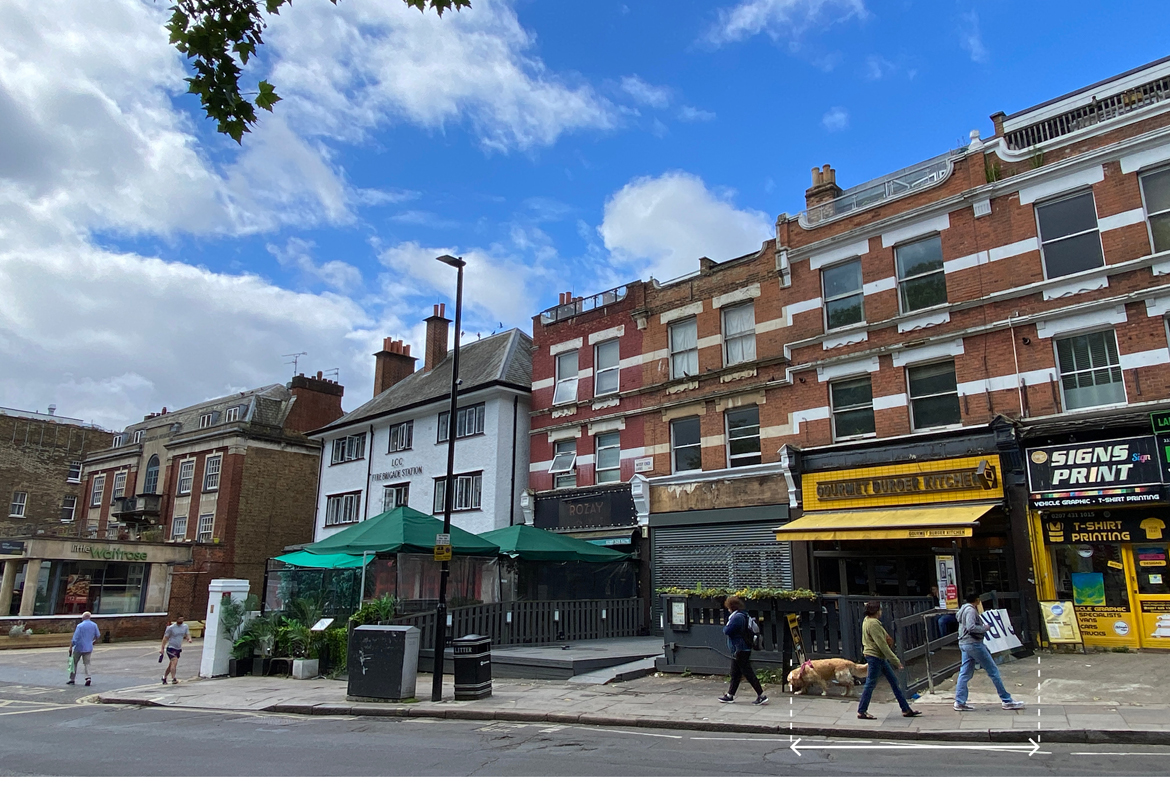
File:Great Western Road, W11 - geograph.org.uk - 362482.jpg - Wikimedia  Commons
 
 
#93: MARK RONSON & THE BUSINESS INTL.

"Bang Bang Bang"

from the album Record Collection

Released: September 2010


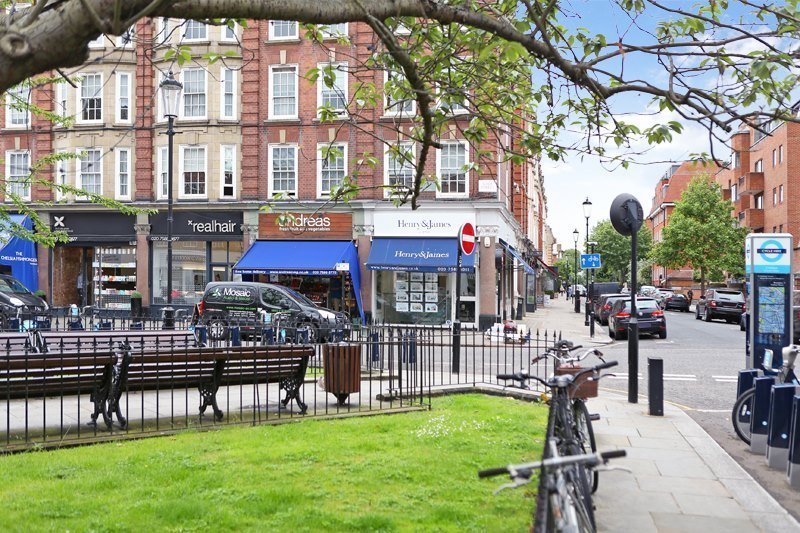
One grey, overcast Wednesday afternoon in the very late summer of 2010, we made our way to Portobello Road, or at any rate just off it, because Mark Ronson was in attendance at Rough Trade West promoting his then-new album. I had the day off work and we were always keen to spend as much time away from our accommodation - as it then was - as possible. I can't remember whether we saw Kelly Hoppen directing the unloading of a van across the street from the bus stop - well, we did, but I cannot recall whether it was on that same afternoon or another time altogether.


In the shop, Ronson was seated, having dyed his hair silver, chatting enthusiastically to a couple of young ladies. He signed our copy of the CD without really looking at us. Others in attendance, namely Rose Elinor Dougall and I think Amanda Warner, a.k.a. MNDR, were more forthcoming and gave us nicer signatures. Other books are available.


"Bang Bang Bang" was the first single from an album intent on reconstituting the musical elements of its chief creator's childhood and rendering it meaningful in the 2010 present tense. In any setting it would be a daunting declaration of principles, even if, as guest rapper Q-Tip is at pains to point out, principles are everything a living society should fulminate and act against ("We're believin' in the proof, we're believin' in the truth/We're believin' in each other, not you, you, YOU!"). The music is Heaven 17/Leisure Process-level insistent (the harmonic fab four of F, C, G and B flat) with swirls of atonal improvisation darting around the verses' background and that key vibraphone button so central to pop qualitatives.


Warner's lead vocal, plucking heads in a cruel, CRUEL world, is remorsefully remorseless; she licks the ice of her assassing lips with valuable venom. She'll apologise for killing you as she does it. The song rotates in Clairol Travelcards of baffled blossom. The song quotes "Alouette," which in itself celebrates the lark, the first bird to sing of a morning, and also the worst gossip. Since that song was initially published in A Pocket Song Book for the Use of Students and Graduates of McGill College in 1879, i.e. in Montreal, it is technically French-Canadian. The staccato shoots and sudden ending of "Bang Bang Bang," if they are not to represent the end of the world, should indicate the building blocks for another, better one, and that's what the song would show anyone. I think we caught a 328 bus to go to West Hampstead, the penultimate time we've been there to date.


We've never had a record collection. Collections are dead things that you just sit and stare at and never actually like, let alone listen to. We have a record library. Everything gets used, listened to and loved and they're maybe not in mint condition but we don't run a museum or a mortuary. We're on the side of life, while that's still legal.


Property Auctions London, Property Auctioneers London, London Property  Auctions, Property Auctions London - Barnett Ross Property Auctioneers 


CHAPTER 9


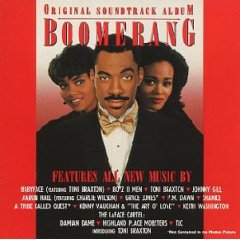
Boomerang (soundtrack) - Wikipedia 
 
 
Detroit - March 1992 Flyover


#92: BOYZ II MEN

"End Of The Road"

from the album Boomerang: Original Soundtrack Album

Released: June 1992


Although it was very far from being the last hit on the Motown label, “End Of The Road” was maybe the last recognisable “Motown hit” that most people would remember without looking the rest up, and listening to its full-length 5.48 version, and having grown up with Motown in my bones, it is difficult not to become emotional at the spectre of a long and crucial chapter in music being brought to a close. Everyone involved in its making, from writers/producers L.A. Reid and Babyface onwards, must have known the record’s real significance, since stylistically it reaches far, far back, towards the fifties street corner symphonies which gave Motown its original life. This may have been recognised by the record’s American buyers, who made it the most commercially successful of all Motown singles and kept it at number one for a then record thirteen weeks. Here in Britain, although the song only stayed on top for three weeks, it had climbed the chart slowly and patiently for over two months – a real slow burner – before peaking, just as in the old days.

The four members of Boyz II Men take turns to voice the one soul, the soul who knows that he can’t really stop his girl from leaving, but is not confident that he will survive her departure. Their voices cluster and dovetail together just as the teenage Temptations (when they still called themselves the Primes) would have done back in Detroit, but the pain steadily escalates. At first they try to laugh her words off – there is a somewhat forced giggle after the line “Girl, I know you really love me,” and the following lines of “You just don’t realise you’ve never been there before/It’s only your first time” suggest that he may give her the benefit of the doubt (“Maybe I’ll forgive you” – is this “Band Of Gold” narrated from the other perspective?). But then there’s the untrammelled agony of the screaming “Pain in my head/Oh, I’d rather be dead!”

And finally, the crucial break in the song’s smooth 6/8 journey, as the bass narrator – taking the tradition even further back, to the Mills Brothers and Inkspots – voices (possibly to himself) his true feelings: “When you just hurt me and just ran out with that other fella…baby – I knew about it…I just didn’t care…You just don’t understand how much I love you, do you?” he asks in rhetorical pity. As the song swells up towards its final climax behind him, his hurt becomes more palpable – “Yes baby, my heart is lonely…My heart HURTS, baby…Yes, I feel pain TOO!…Baby PLEASE…”

So the soul knows her untruth, yet the soul clings because it doesn’t know how not to; because “End Of The Road” stands as a metaphor for the imminent passing of Motown, and the extreme reluctance not to let go of those memories, that sometimes utterable magic…”Although we’ve come to the end of the road/Still I can’t let go/It’s unnatural!/You belong to me…I belong to you!” The music finally fades to leave the voices on their own, clapping their hands to the slow rhythm, back to doo-wop, back to reminding us all how it started; they wave their farewells, the book is closed…but for those of us who lived through even half of Motown as it happened, that book will always remain open.
 
THEY.
 
CAN'T.
 
LOSE.
 
THEIR.
 
SELVES.
 
AGAIN.


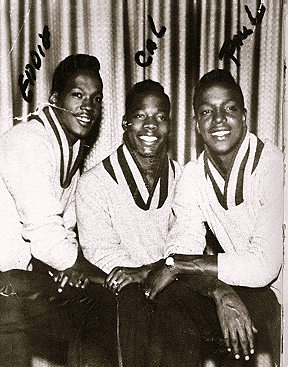
The Primes


CHAPTER 10

Right Here, Right Now (Giorgio Moroder song) - Wikipedia 
 
Munich | Germany, History, Population, Oktoberfest, Map, & Facts |  Britannica
 
#91: GIORGIO MORODER featuring KYLIE MINOGUE
 
"Right Here, Right Now"
 
from the album Déjà Vu
 
Released: June 2015


The beat is a little too forceful to be considered lithe. There appear to be trapped voices deep within the rhythmic sarcophagus. But a woman's voice emerges, slightly bruised by circumstance but still capable of mandated enthusiasm and only partially-stifled wonder. The flashing lights indicate that she is in the club - if the club is to be considered shorthand for the world, which it must - and dancing with someone she might not love but at this moment does not want to love. The sixties girl group "yeah?"s herald some doubt imposing on the singer's self-imposed ecstasy - she could look for love "to get over you," or "for a deeper kiss."
 
 
But the orchestral shimmers indicate that permanence is the last thing on the singer's mind. It illumines her what-other-world wonder and underlines the perceived fact that there is nothing, nowhere, no one, no time, but the singer and whoever is dancing with her and making out that they love her for, oh, another hour at least. It may all be a dreamed Holy Grail, but nothing in the singer's whole life has seemed so touchably real to her and this, and only this, is what she decides matters. In her partner's eyes, she sees the sunrise, but her song never climaxes; having made its point, it fades with gentle abruptness into nothingness, as all sunrises must, its guitar strokes casting the shadow of half a lifetime away.
 
 
It could be said that this singer feels love.
 
 
The song had nothing to do with Jesus Jones but may have been Giorgio Moroder's way of saying hey, I'm still here and haven't fallen asleep. The Daft Punk modules and Nile Rodgers chordalities underline a legacy perhaps a little too firmly, as though this union were convenient rather than symbiotic (as had already been demonstrated on "Get Lucky," which works so fully because not for one second does it sound as though it is trying to make a statement about something). Some wondered whether Moroder was now gamely following trends rather than creating them. Kylie Minogue sings as a Selfridges cosmetics assistant lost in consumable space might.
 
 
As a pop record it was slightly reticent. One radio disc-jockey commented that it sounded slightly dated. It didn't catch on. But its beacon beams an unreal, yet concretely palpable, aura of magic which only practised professionalism can blur into an adornment.
 
 
Melbourne - Wikipedia


CHAPTER 11

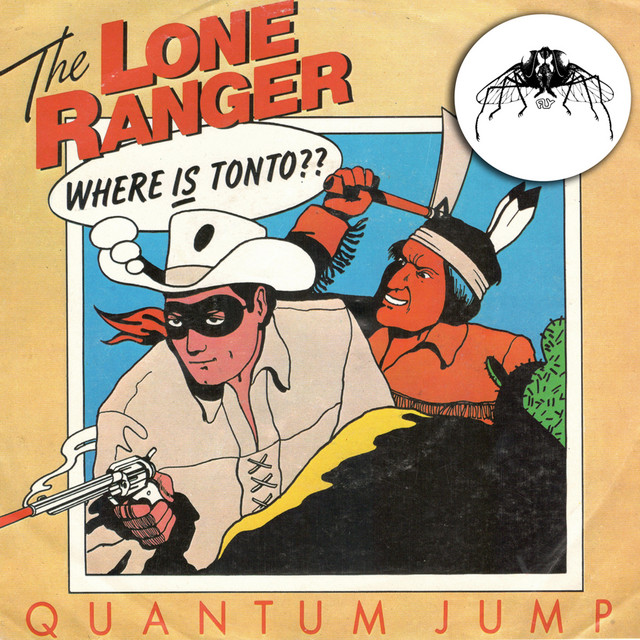
The Lone Ranger - Single by Quantum Jump | Spotify 
 
Wimbledon, London - Wikipedia
 
#90: QUANTUM JUMP

"The Lone Ranger"

From the remixed single: "The Lone Ranger"
 
Released: May 1979
 
 
Politely hyperactive jazz-funk to conceal the smoothest of lounges, with the guitarist and drummer in particular knowing what they're doing. That's coming from one direction. Feom the other comes a bass pulse which resembles the breathing of a miked-up salamander. Curiously rootless, it indicates another path for dance music in which the bass acts as the song's cynosure, rather than its foundation.


The vocal is authoratitively breathy, resigned yet committed. If it didn't remind you so much of Ian Anderson - who is a Scot - the way in which the voice here wraps its flexors around the Estuary English hard "a" leaping out of the word "masked" in the choruses, you'd think of it as irrefutably English, eveen though its subject matter is American, created and originally broadcast in Detroit (so it is one stop away from being Canadian, another in laying the path for May, Atkins and Saunderson to tread the following decade).


But it's the hook which gets you. Whatever the hell he's chanting, like a Kingsley Amis variant on the introduction to "Tutti Frutti," it evades proper meaning sufficiently to echo with mindful mindlessness across school playgrounds. You don't really listen to the words beyond the dim awareness that this is a shaggy dog story about Tonto and kemosabe, complete with deliberate corn ("back to front-o").


Because it's a hook you know from The Kenny Everett Video Show, which you watch every Monday early evening at 6:45 pm and which is infinitely hipper than the Opportunity Knocks which preceded it. Top Of The Pops was a craggy pastel tent compared with Everett, and apart from the humour (more Jack Jackson than Milligan) it quietly demonstrated an astute pop-reading mind. Cerrone's "Supernature" was the theme tune, and the "Lone Ranger" hook was one intermittent heck of a leitmotif. "Ride into tomorrow today" suggested forgetting The Seventies and hurtling ourselves away from them as fast and eagerly as possible.


I remembered the song from being played briefly on daytime radio, and less briefly on Luxembourg, back in 1976. Back then it sounded as futuristic as, or more obligingly and Englishly so than, whatever Moroder was doing. The songwriter, singer, keyboard player and producer was Rupert Hine from Wimbledon, future producer of The Fixx.


It wasn't on mainstream radio for long, though; most producers saw through what Tonto's peace pipe could make people do, and there was that derogatory slang word for gay that seemed cruel and pointless even then, even though Hine was clearly performing the song from the perspective of its chief narrator, who, twist in the tale approaching, realises the Ranger is gay and...doesn't mind.


The questions the song raises, and the fact that it was picked up and promoted by a fairly openly gay disc jockey, suggest a more complex beast than the one routinely excluded from today's oldies radio. I don't think anyone at my school disco picked up its lyric at all, and these were the same peers making messy fools of themselves attempting to reproduce the intrinsically naff yet deceptively complex dance routines of the band Racey. It was just a great, imaginative liminal pop dancer.


You could never get away with a song like that in the 21st century. But then it wasn't created in the 21st century, and I think we have to get away with the notion of the whole of history being an imperfect path leading us to an allegedly perfect present. Oldies shows on the radio based around the charts - or indeed our received reaction to anything we perceive as dwelling in and for the past - grant us only that version of the past considered most convenient or comfortable for us. I suspect that the reason somebody like Bowie gets such singeingly heavy ladles of hagiography methodically thrust upon him is that he doesn't really represent glam, but we cannot mention the central figure in UK glampop - for reasons that are entirely the fault of said central figure - hence burden the likes of Bowie and Roxy Music with laurels which exceed their actual reach in the period.


We only seem to want the kind of airbrushed history that is acceptable to us, that nods at us, licks our faces and agrees with us. But if you persist in doing that you end up with a sorely atrophied and smudged photocopy of actuality. Focus your eyes on the approved jewels and try to sweep away the dirt without really looking at it. If nothing else, you lose a lot of fun, and are left with a solemn, stuffed New England classroom lecture. It is as if your history, your life as you have known and lived it, your life as your gut recognises it, is rendered into affable nothingness.


It also makes life as a fan of pop music so awkward and complicated that it might drive you to exchange it for a less hassle-ridden pastime, such as birdwatching. You can't fully understand "American Pie" if you don't know, or aren't exposed to, "Rock And Roll (Part 2)" - as rock dies, it is born again, and in the same year. Given the documented fact, however, that both Messrs McLean and Gadd are convicted offenders against women, you keep whittling the essence of what admittedly may be an essentially rancid thing - I don't know, that argument is for another book - eventually leaves you with nothing except the unlovably worthy. Even then, where do you go? "Well, she was just seventeen, if you know what I mean" go the first and second lines of the first song on the first Beatles album; throw those fellows out as well?


What I'm awkwardly trying to state here is that you can't live history as though it were the cloisters of a monastery, with all the mess scrubbed out. Yes, most pop musicians have done and said impossibly horrible things; name me one who hasn't. So you decide to stick to jazz then remember the stories about Miles and Mingus. Awareness of the vaudevillian primitivism at the heart of "The Lone Ranger," including some deeply ill-advised reactions of other band members in the video, as well as David Toop's recent caution that "[in] so much antique comedy...particularly that which depended for its amusement on making sport with those who lack power or are simply different, the laughs have evaporated into a silence of bewilderment: how was this ever [considered] funny?" doesn't prevent me listening to and enjoying Pansy Division, or Phranc, or Shockheaded Peters, or you can list the rest. In my spare time I like to listen to pop records that were hits when I was still at school, to help recall what kind of boy I was and the sort of life I led or was compelled to lead. It isn't just pop records, either - I loved and still love records by the Louis Moholo-Moholo Octet, Anthony Braxton, Keith Tippett's Ark, the Art Ensemble of Chicago. They remind me of where I came from. It was my world and I revel in it, or at least wink at it, without an element of shame or hypocrisy. If our worlds are to contain multitudes, we must therefore recognise that they are, by definition, awash with ridiculous contradictions. History is not our butler.

Geordie Greep - Holy, Holy


CHAPTER 12

John Cale – Bicycle – Vinyl (12"), 2003 [r252464] | Discogs 
 
Headington Road, Oxford © Stephen McKay :: Geograph Britain and Ireland
 
#89: JOHN CALE

"Bicycle"

from the album HoboSapiens

Released: October 2003
 
 
Oxford, obviously. Cycling up a very steep incline all the way to the Library at Brookes University. The intermittent pumps of organ (or possibly harmonium) remind us of the premature autumnal glory of light (and perhaps Ivor Cutler). The quietly frantic citizen, trying to find Sid so that he can tell him about those gas shares. Dart round the village (or The Village) speedily enough to encompass its body in discounted gold.
 
 
The beat is a dancing lurch, grinding as it glosses. A 1981 fantasy of what a dance record could be as set against the screwed-in 2003 template. As opaque a flotation as the jelly of lemons (all the ducks wish they could cycle in the water). A looped, deepened, worn-out male voice ("do-doo-do-doo," teetering on the brink of an asthma attack) which may be winking wearily at Lou Reed's wild side (therein would lie the payback), eventually and lusciously counterpointed by a breezy, non-worried female equivalent. The bell of the bike, the afternoon toll of blue ghosts in the air.
 
 
Sometimes the beat comes to an awkward halt, as though having just encountered the sandwich-craving sheep of Top Withens. "Ponce!" cackles a sampled female voice, before the hymnal reverts to physical and the main voice eventually runs out of fitness (an elongated and possibly gratified "phew" at song's end).
 
 
The Wales, of course, the Llaggerub, John the Drone with the help of Brian the Drumloop. The vanished, the vapourised velveteens. And those sheep. And the reminder of how Nico died. A song for Chelsea.
 
Ibiza Bike Tours | Cycling in Ibiza - Bike Ibiza 
 
2 Cale Street Chelsea London SW3 3QU Commercial property search - Mellersh  & Harding LLP 


CHAPTER 13


Video Games (Lana Del Rey song) - Wikipedia

Twin Peaks in Bryan, TX | American Food & Sports Bar

 
#88: LANA DEL REY

"Video Games"

from the album Born To Die

Released: January 2012


It could be either the last or first song of Creation.


The bell tolls for the field, which may well be rendered to carbon or may not yet have formed.


The harp of an angel.


It may as well be a country song with its talk of pool, wild darts, big arms, bad girls and old bars. It could equally be a teenpop song about how technology makes us all fall in love or see love's true essence, hence should ideally be accompanied by a ghostly troupe line dancing to a silent limbo.

 
The singer sounds nervous, bewildered or awed. It is possible that she could be all three. Awed because this is love as she has come to recognise and understand it - here, in this least promising of human arenas, drunk guys clicking and scoring points, but outside the bar, in the big drunken moonlight, you realise this is all you ever wanted and it's here, right here and now ("It's better than I ever even knew").


Maybe she also sounds a little disappointed - the third and fourth "Ev" of the "Everything"s which commence the choruses, the slightly impatient and frustrated "I tell you all the time," the way her voice falters and gulps on the two syllables that she manufactures out of the first "video gay-haymes," the prematurely bereaved whimpers of her "Is that true?"s. As if this is all it is, all she's going to derive from this gaudy puzzle called life.


And as for "baby, now you do" - now you do what? They (who are "they" and is the ghost of Kay Dick aware of  "them"?) say that the world was built for two (life is like a bicycle), only worth living if somebody is loving you. That whole sequence makes no sense, is subtly delirious like the lucid dreams you might come into if the morphine quarrelled with the anaesthesia. But we know what she means; it is the same subtle discolation of reality you get in the fed-back undertow of Psychocandy.


Strings, bell, that piano which you might imagine is being played inside your head. The emptied or fruitful plain; it's hard to tell in the dark.


The mysteries of love; a possible solution.
 
 
All Time Classics: Blue Velvet(1986) | The Vern's Video Vortex. 


CHAPTER 14


Sleeping Satellite - Wikipedia 
Southbound M40 at Junction 6 © David Dixon :: Geograph Britain and Ireland
 
#87: TASMIN ARCHER

"Sleeping Satellite"

from the album Great Expectations

Released: October 1992


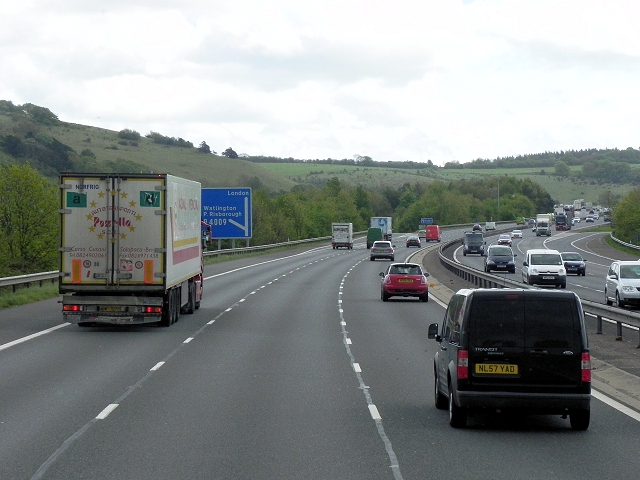
How those increasingly dark autumn journeys back home on the Oxford Tube in 1992 slowly yet elegantly assumed a new warmth in terms of expectations; how after both the best and the worst of weeks at work the highway, however light or dark – and if light, it was that unusually intense auburn glow of autumnal light – always led me back to the dream, up Hythe Bridge Road, past the ancient burger van just outside the railway station, then down Botley Road a little further and finally the loving lights of home. Likewise the music of that autumn took on an especially intense tendency; late Sunday night runs back from London, at the back of the coach singing “Man On The Moon,” the last track of Kitchens of Distinction’s The Death Of Cool, all of Stereolab’s Peng!, dC Basehead’s still extraordinary Play With Toys, just to mention a few very random examples (the albums Harvest Moon by Neil Young and Erotica by Madonna, the latter the silver to Automatic For The People's Warners gold, are yet two others).


It follows that I still have an extremely soft spot for the number ones of that period - including Charles and Eddie's "Would I Lie To You?" and the abovementioned "End Of The Road" - and “Sleeping Satellite" epitomises that welcoming autumn breeze (as opposed to a chill). Some called the young Black singer/songwriter from Bradford the new Tanita Tikaram, even though much of her debut album Great Expectations, including “Sleeping Satellite,” was written as far back as 1988. In fact she sounds like a female, softer Seal, radiating the same anxious curiosity of concern in her voice.


Is “Sleeping Satellite” arguing in favour of or against progress? With its accusatory hook of “I blame you for the moonlit sky/And the dream that died/With the eagle’s flight” there are reminders of my mother and grandmother, both of whom blamed the Apollo flights as precipitatory factors in the subsequent radical changes in the Earth’s weather, the systematic depletion of the ozone layer, and so forth. But she continues: “I blame you for the moonlit nights/When I wonder why/Are the seas still dry?/Don’t blame the sleeping satellite.” In other words, don’t blame the moon for existing, but did we seal our eventual doom by wanting to touch it (“And still we try/To justify the waste/For a taste of man’s greatest adventure”)? Or was it a luxury at the expense of more pressing needs at home (cf. Gil Scott-Heron’s “Whitey’s On The Moon”) – “If the Earth’s sacrificed/For the price of its greatest treasure”?


The performance balances its various strands of anguish; Archer’s plaintive voice breaking on the first “flight,” her hoarseness straining on “greatest adventure,” her underlying sweetness (especially on the wordless “wo-ho-ooh-wo-oo-ho”s between verses and at fadeout) bringing an older and sadly wiser Kim Wilde to mind – the sudden blossoming of backwards, dreaming harmonies in the middle eight sound like Dollar, but then the lid is roughly closed by two sets of four harsh guitar/piano strums.


And still Archer believes it might just be worth the price. “And when we shoot for the stars/What a giant step!/Have we got what it takes/To carry the weight of this concept?” The song dissolves between its gorgeous 1967-meets-1982 chords and its shards of organ and lead guitar. “Or pass it by/Like a shot in the dark?/Miss the mark with a sense of adventure?” “Sleeping Satellite” is a polite scream raised under a bluer moon, brilliantly produced by Julian Mendelssohn and Paul Wickens, which essentially asks its listeners to choose between past and future, expedience and long-term, adventure and safety – but somehow remembers to bear in mind that it shouldn’t really be an either/or situation.

 
Bradford businesses seek support for night-time economy - BBC News 


INTRODUCTION

  The purpose of this blog is to publish a 117,156-word book that I have written, entitled Uncorrected Bound Proof . I commenced writing it...