
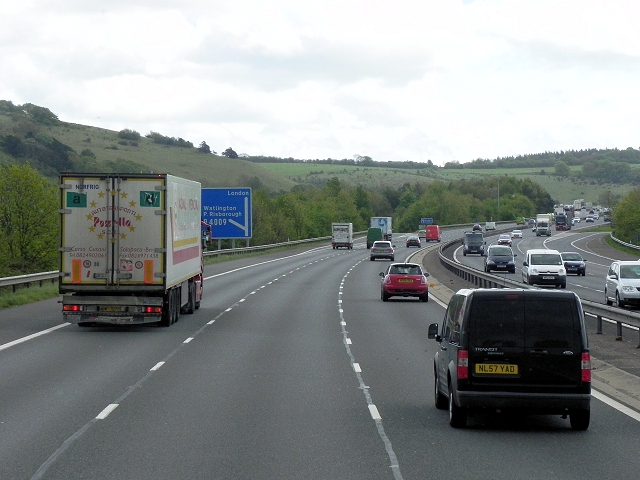
How those increasingly dark autumn journeys back home on the Oxford Tube in 1992 slowly yet elegantly assumed a new warmth in terms of expectations; how after both the best and the worst of weeks at work the highway, however light or dark – and if light, it was that unusually intense auburn glow of autumnal light – always led me back to the dream, up Hythe Bridge Road, past the ancient burger van just outside the railway station, then down Botley Road a little further and finally the loving lights of home. Likewise the music of that autumn took on an especially intense tendency; late Sunday night runs back from London, at the back of the coach singing “Man On The Moon,” the last track of Kitchens of Distinction’s The Death Of Cool, all of Stereolab’s Peng!, dC Basehead’s still extraordinary Play With Toys, just to mention a few very random examples (the albums Harvest Moon by Neil Young and Erotica by Madonna, the latter the silver to Automatic For The People's Warners gold, are yet two others).
It follows that I still have an extremely soft spot for the number ones of that period - including Charles and Eddie's "Would I Lie To You?" and the abovementioned "End Of The Road" - and “Sleeping Satellite" epitomises that welcoming autumn breeze (as opposed to a chill). Some called the young Black singer/songwriter from Bradford the new Tanita Tikaram, even though much of her debut album Great Expectations, including “Sleeping Satellite,” was written as far back as 1988. In fact she sounds like a female, softer Seal, radiating the same anxious curiosity of concern in her voice.
Is “Sleeping Satellite” arguing in favour of or against progress? With its accusatory hook of “I blame you for the moonlit sky/And the dream that died/With the eagle’s flight” there are reminders of my mother and grandmother, both of whom blamed the Apollo flights as precipitatory factors in the subsequent radical changes in the Earth’s weather, the systematic depletion of the ozone layer, and so forth. But she continues: “I blame you for the moonlit nights/When I wonder why/Are the seas still dry?/Don’t blame the sleeping satellite.” In other words, don’t blame the moon for existing, but did we seal our eventual doom by wanting to touch it (“And still we try/To justify the waste/For a taste of man’s greatest adventure”)? Or was it a luxury at the expense of more pressing needs at home (cf. Gil Scott-Heron’s “Whitey’s On The Moon”) – “If the Earth’s sacrificed/For the price of its greatest treasure”?
The performance balances its various strands of anguish; Archer’s plaintive voice breaking on the first “flight,” her hoarseness straining on “greatest adventure,” her underlying sweetness (especially on the wordless “wo-ho-ooh-wo-oo-ho”s between verses and at fadeout) bringing an older and sadly wiser Kim Wilde to mind – the sudden blossoming of backwards, dreaming harmonies in the middle eight sound like Dollar, but then the lid is roughly closed by two sets of four harsh guitar/piano strums.
And still Archer believes it might just be worth the price. “And when we shoot for the stars/What a giant step!/Have we got what it takes/To carry the weight of this concept?” The song dissolves between its gorgeous 1967-meets-1982 chords and its shards of organ and lead guitar. “Or pass it by/Like a shot in the dark?/Miss the mark with a sense of adventure?” “Sleeping Satellite” is a polite scream raised under a bluer moon, brilliantly produced by Julian Mendelssohn and Paul Wickens, which essentially asks its listeners to choose between past and future, expedience and long-term, adventure and safety – but somehow remembers to bear in mind that it shouldn’t really be an either/or situation.



No comments:
Post a Comment